EVERYDAY RITUALS
An entrance that welcomes you.
The entrance is more than a passage between the outside world and the rest of your home. It is where the day begins to change pace.
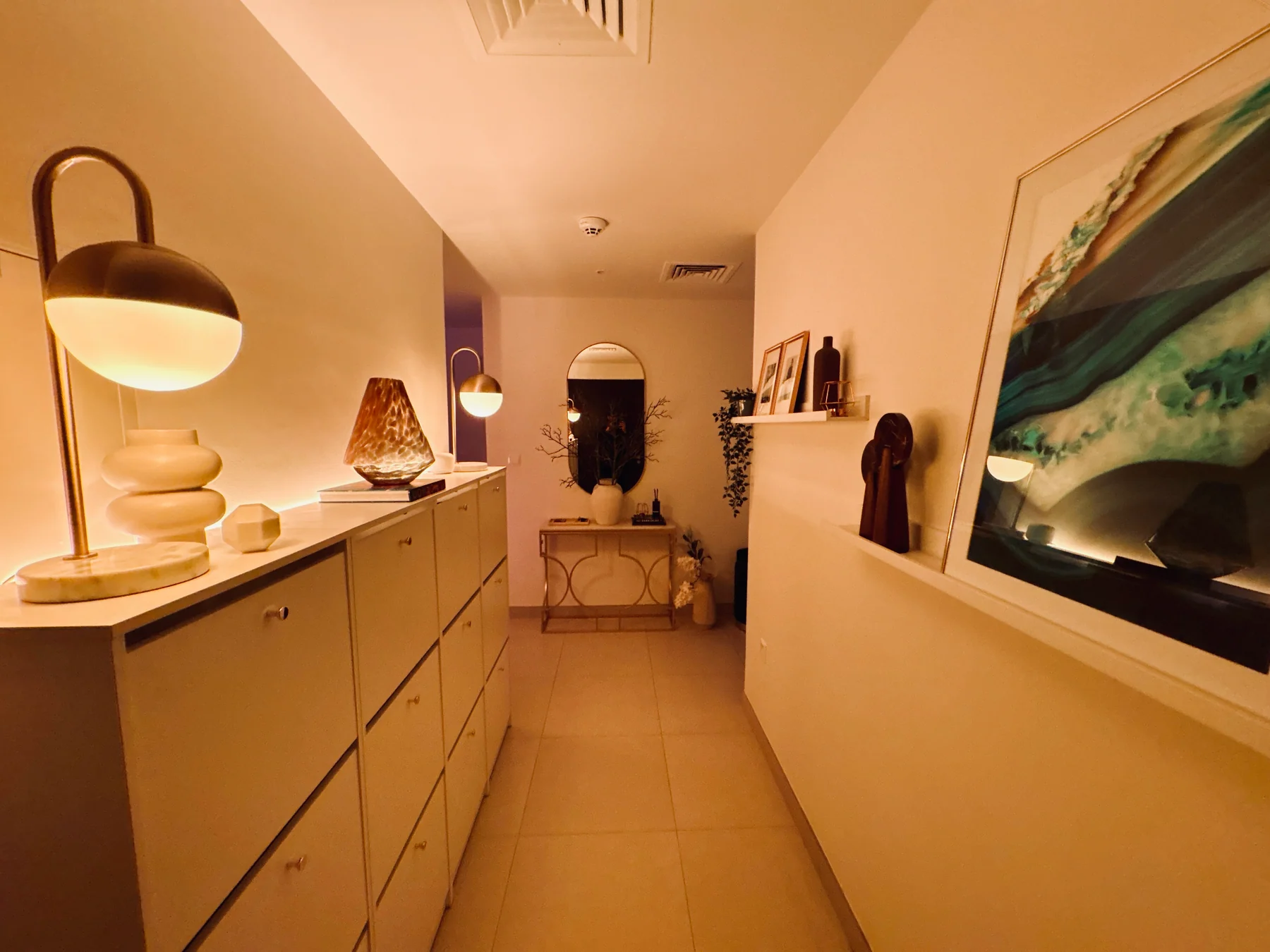
Watch the first thirty seconds.
Imagine arriving with your hands full. Where do the keys go? Where do shoes land? Is there somewhere for the bag that otherwise ends up on a dining chair? These small actions are the real brief. A console that looks beautiful but offers no help with them may simply become another surface to clear.
Begin by giving the most frequent objects a place close to where you use them. Closed storage can quiet the view, while one small open dish can keep a daily essential easy to find. The balance depends on your habits; there is no need to put every object on display.
Protect the passage.
In a narrow entrance, depth matters as much as width. A cabinet can fit against the wall and still make passing another person awkward. Consider the door swing, the way drawers open and what happens when someone stops to put on shoes.
Mark a proposed piece on the floor before committing. Walk through with a bag, open nearby doors and notice where you naturally turn. A smaller piece that allows the route to feel easy can make the entrance more generous than a larger piece chosen only for its storage capacity.
Choose a moment to arrive to.
Once the practical arrangement works, give the eye somewhere to land. It could be art, a mirror with a useful reflection or a lamp that softens the end of the passage. One clear moment often brings more calm than several equally insistent objects.
In the photographed entrance, the mirror and console make an end point, while a sequence of warm lights connects the route. The art and ceramics add variation around that structure. The lesson is not to use the same objects: it is to connect the practical journey with a welcoming visual one.
Make the first impression belong.
An entrance feels more connected when it gives a small introduction to the rooms beyond. A timber tone, a softened colour or a curved shape can recur elsewhere without turning the home into a matching set.
Leave some of the surface clear. A welcoming entrance needs room for real arrivals, not only a finished photograph. If the arrangement becomes difficult to use after a few days, adjust it. That feedback is part of designing a home that works.
SOMETHING TO TRY AT HOME
- Notice where keys, shoes and bags naturally land.
- Check the route with doors and storage open.
- Choose one visual welcome, then give it some space.
Talk about your space.
Bring it to a conversation. We can start with what isn’t working, or the feeling you want more of.
Start Your ProjectRelated insights
All Design Insights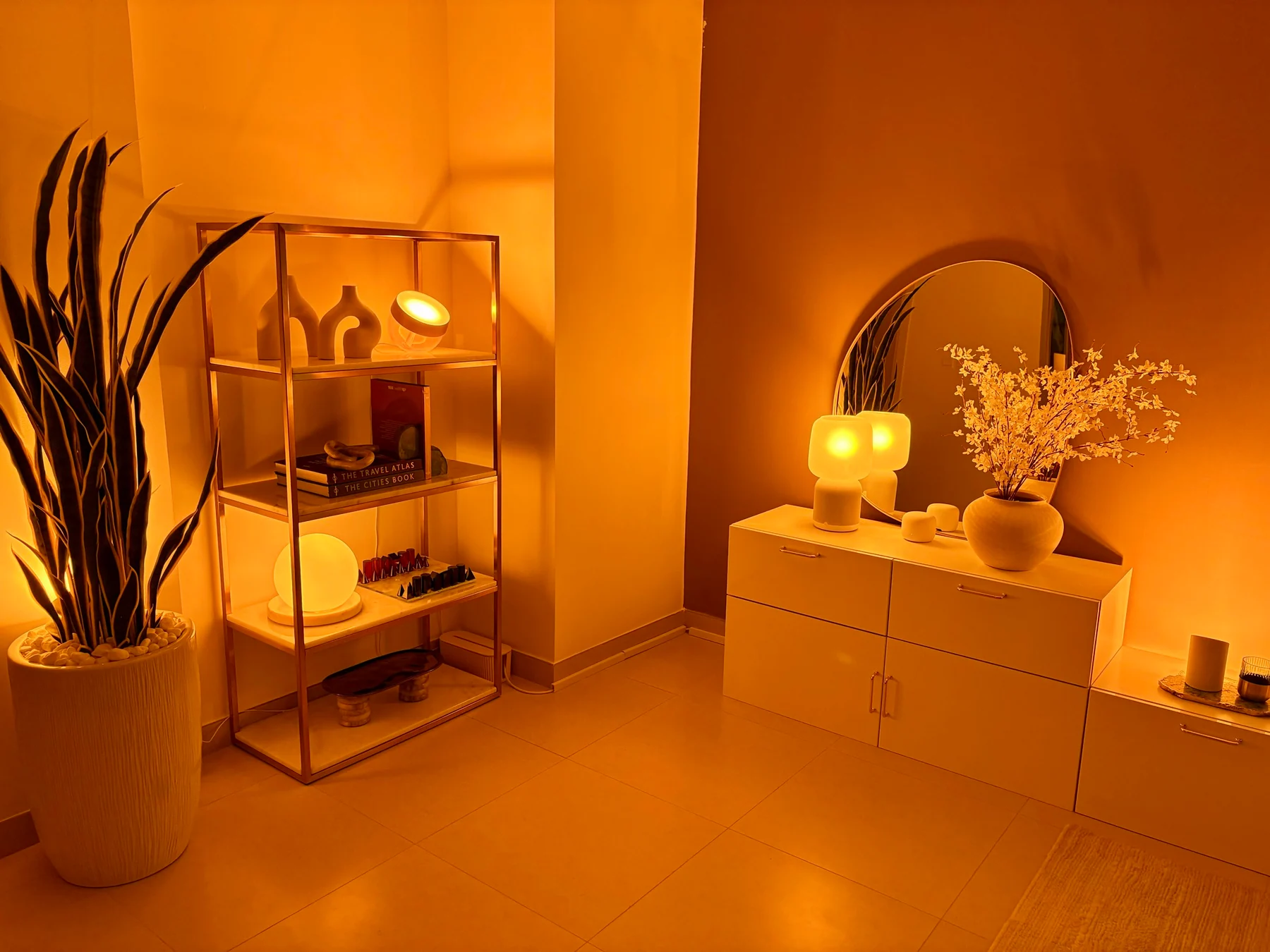
What to keep before you buy.
A new direction does not always need a new beginning. The things you already own can give a room its character, its constraints and its most interesting possibilities.
Read The Insight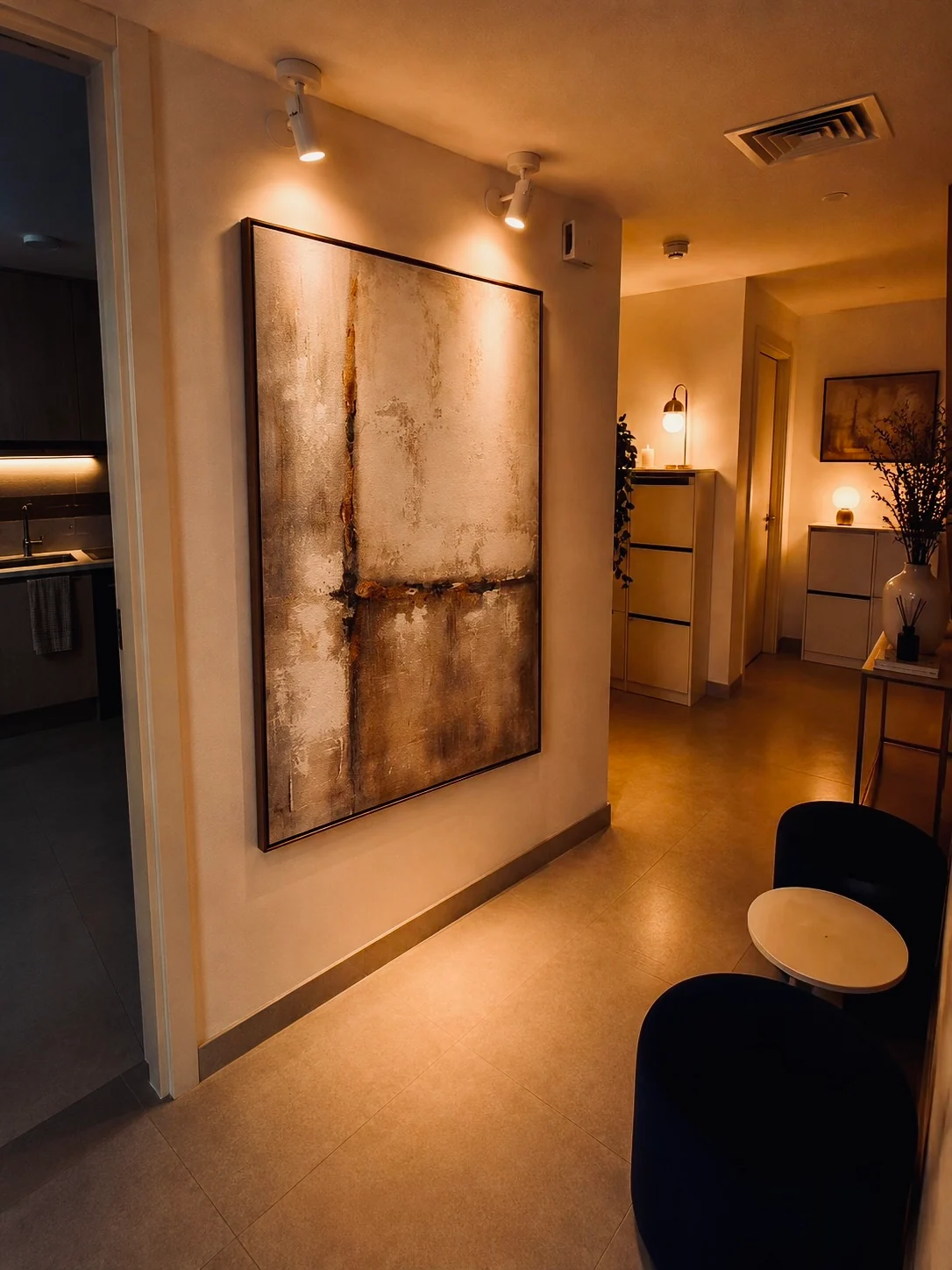
From a feeling to a room plan.
‘Calm’ is a useful intention. It becomes a design direction when we ask what calm would allow you to do, and what in the room is preventing it.
Read The Insight