THE EXHALE APPROACH
From a feeling to a room plan.
‘Calm’ is a useful intention. It becomes a design direction when we ask what calm would allow you to do, and what in the room is preventing it.
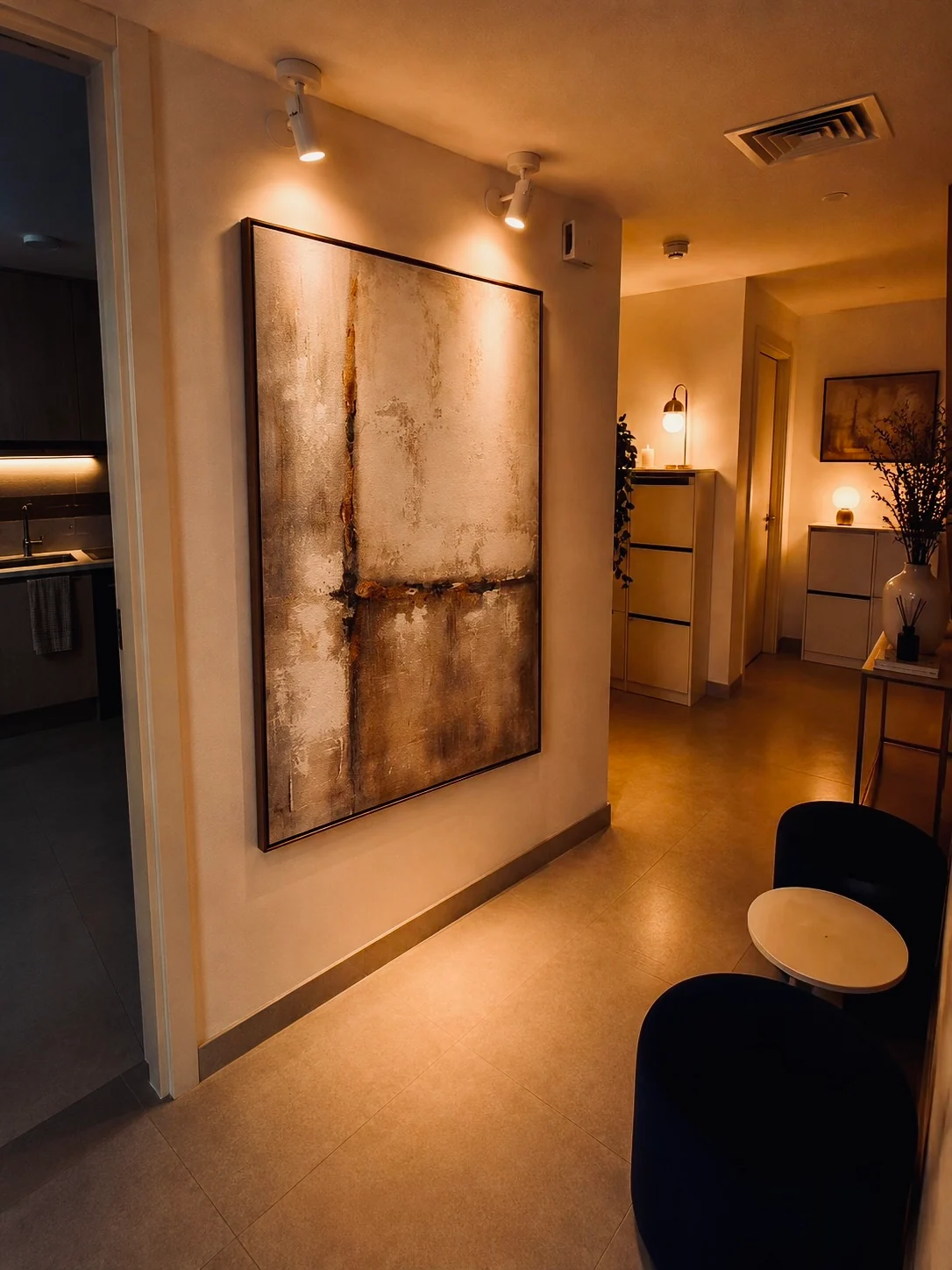
Turn the adjective into a moment.
A calm home could mean a clear kitchen table in the morning, a place to read after work or an entrance that does not greet you with a pile of things to put away. The word becomes more useful when it describes a moment you can recognise.
Write that moment in ordinary language. ‘I want to sit with a book while someone else watches television’ tells us about seating, light and shared use. ‘I want a minimal living room’ tells us something about appearance, but leaves more of the everyday unanswered.
Find the friction.
Look at what interrupts the moment now. Is there nowhere to put a cup? Does the only lamp illuminate the screen? Does reaching the window involve walking around a table? Each observation points towards a decision that can be tested.
Separate a practical problem from a visual preference where you can. Both matter, but they may need different responses. A room that looks quiet can still be awkward to use; a useful layout can still need softer materials or more considered light to feel like home.
Build a small set of rules.
Translate the brief into a few connected principles. Keep the main route open. Put useful light near the activity. Repeat a warm timber tone. Leave a clear area around the art. These are specific enough to guide decisions and flexible enough to allow personality.
Then check a proposed choice against those principles. A striking chair may be right for the palette and wrong for the available space. A beautiful lamp may create the atmosphere you want but need a different shade to be comfortable from the sofa. Design grows through those adjustments.
Make the brief something you can revise.
A brief is not a test you pass before speaking to a designer. It is a shared starting point. Photographs, the things you want to keep and an honest account of what feels unresolved can be more useful than a perfectly presented mood board.
Try the Find Your Feeling exercise to gather those thoughts, or write your own version in a few sentences. Live with the first changes and notice what improves. The aim is a home that supports you, with enough room for the way you live to change over time.
SOMETHING TO TRY AT HOME
- Describe one moment you want the room to support.
- Name the thing that currently gets in its way.
- Turn that observation into one change you can try.
Talk about your space.
Bring it to a conversation. We can start with what isn’t working, or the feeling you want more of.
Start Your ProjectRelated insights
All Design Insights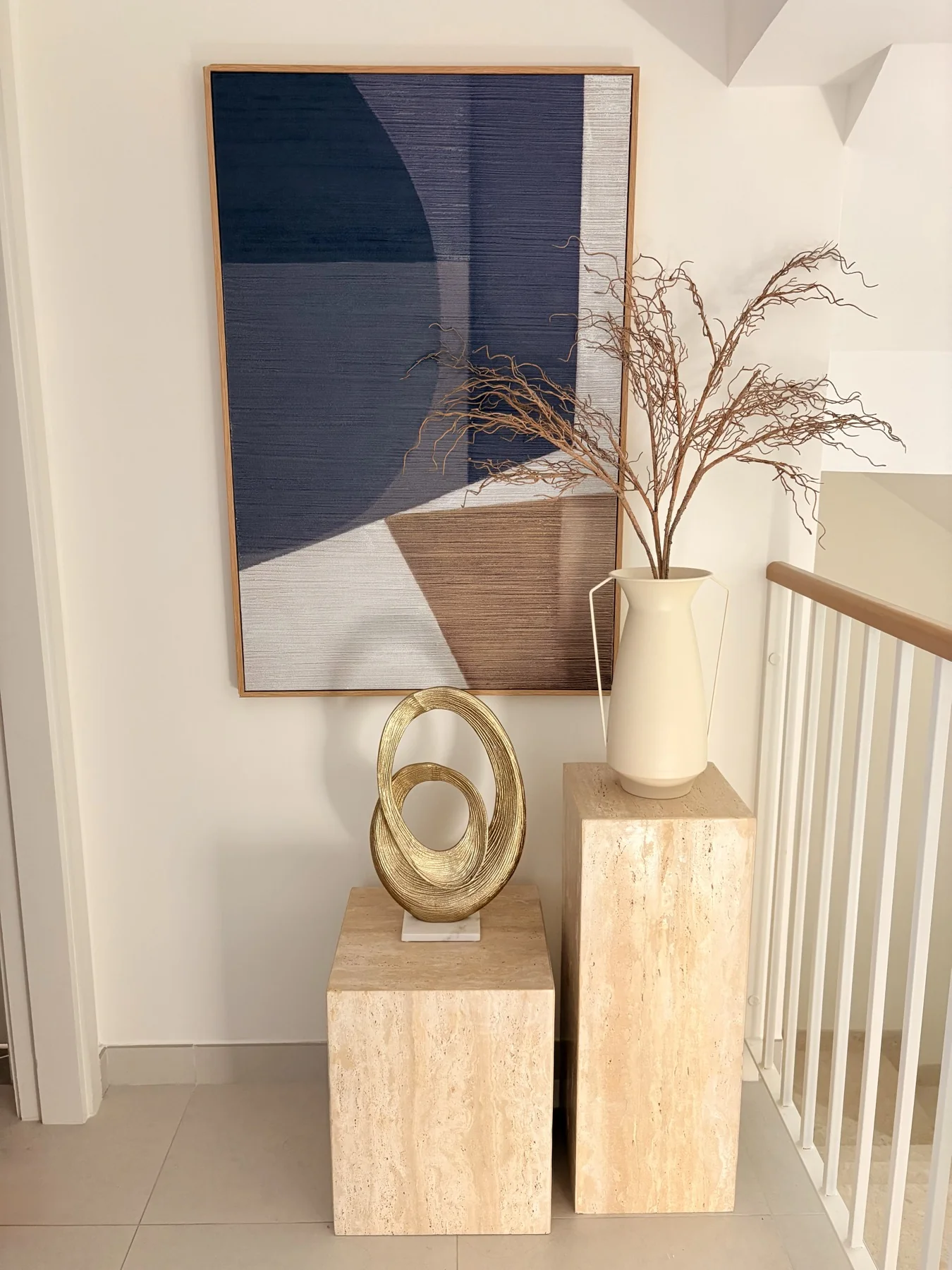
The Materials That Connect A Home.
A home feels connected when familiar details reappear as you move through it. A stone, a warm metal, a thread of colour: small repetitions can give very different spaces a sense of belonging.
Read The Insight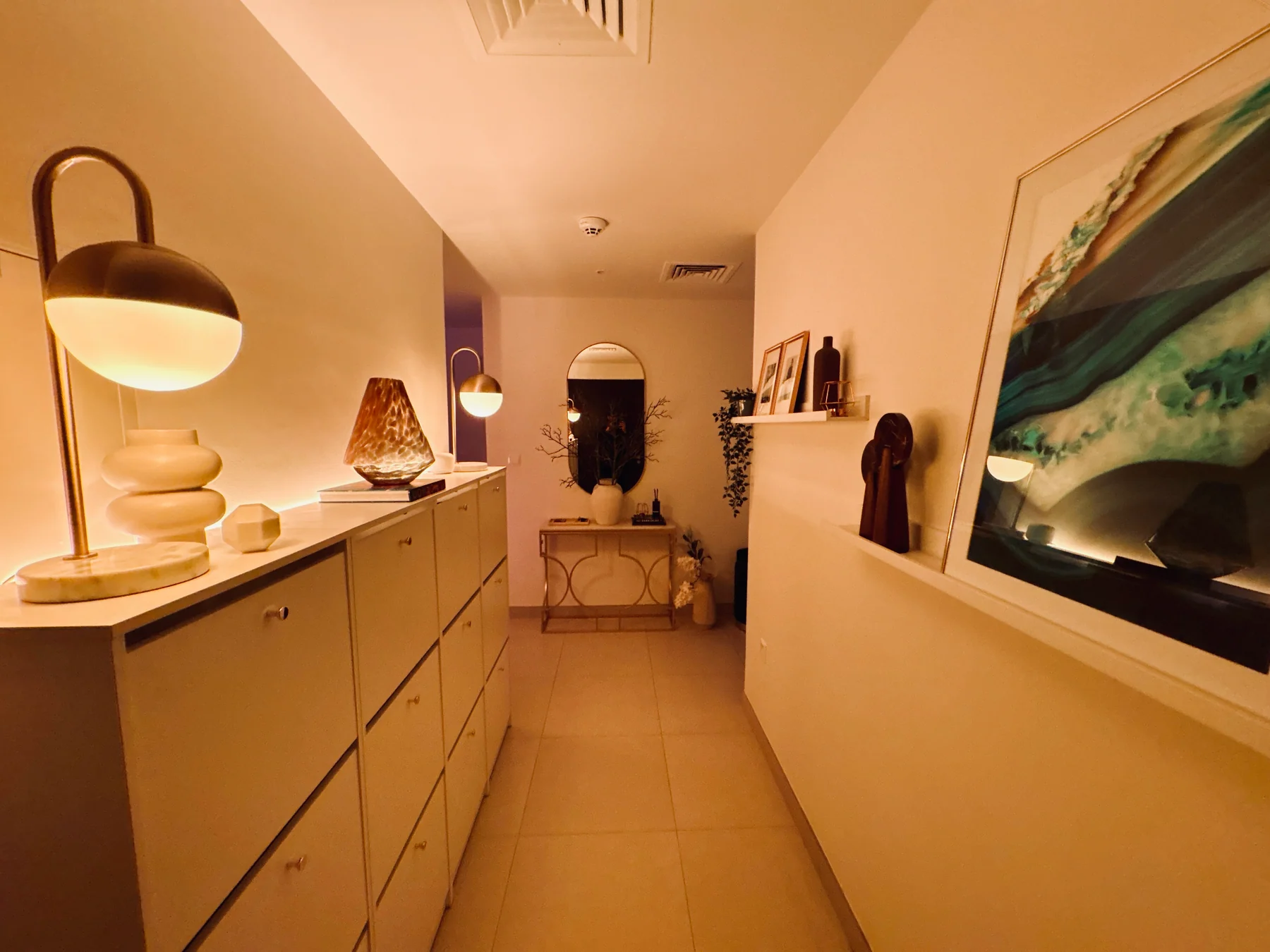
An entrance that welcomes you.
The entrance is more than a passage between the outside world and the rest of your home. It is where the day begins to change pace.
Read The Insight