MATERIALS & CONTINUITY
The Materials That Connect A Home.
A home feels connected when familiar details reappear as you move through it. A stone, a warm metal, a thread of colour: small repetitions can give very different spaces a sense of belonging.
Start With A Material You Want To Live With.
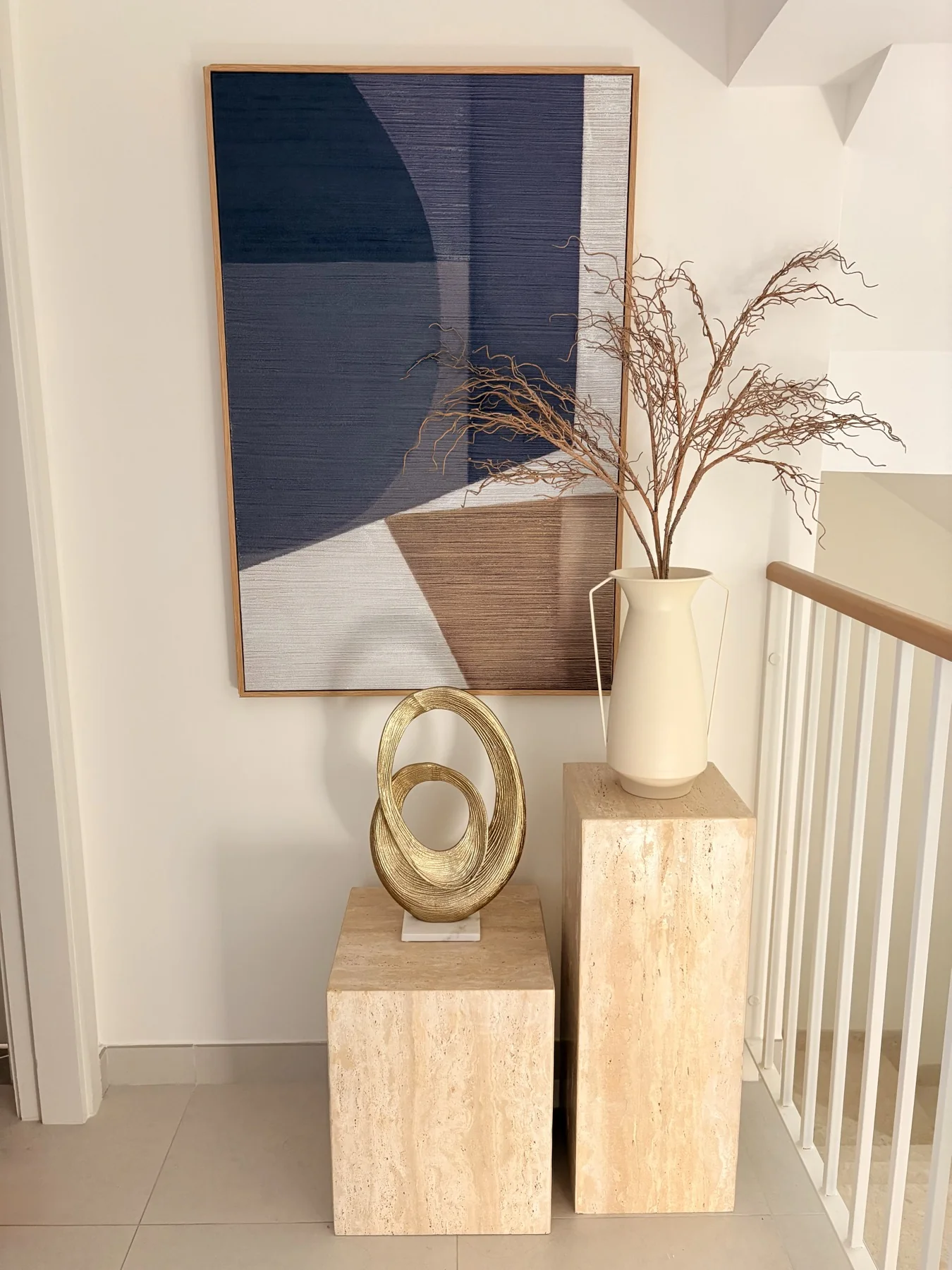
Rather than choosing every room in isolation, I like to begin with a small collection of materials that feel right together. Here, travertine brings an earthy warmth and an irregular surface. Pale stone, cream ceramics and warm metal sit comfortably beside it, while blue adds depth. Each has a part to play.
The two plinths make that relationship easy to see. Their simple blocks let the stone do the talking. The sculpture introduces a warm metallic curve, the vase softens the arrangement, and the artwork brings a stronger field of colour. This one composition becomes a starting point for decisions elsewhere in the home.
Repeat The Material. Vary The Form.
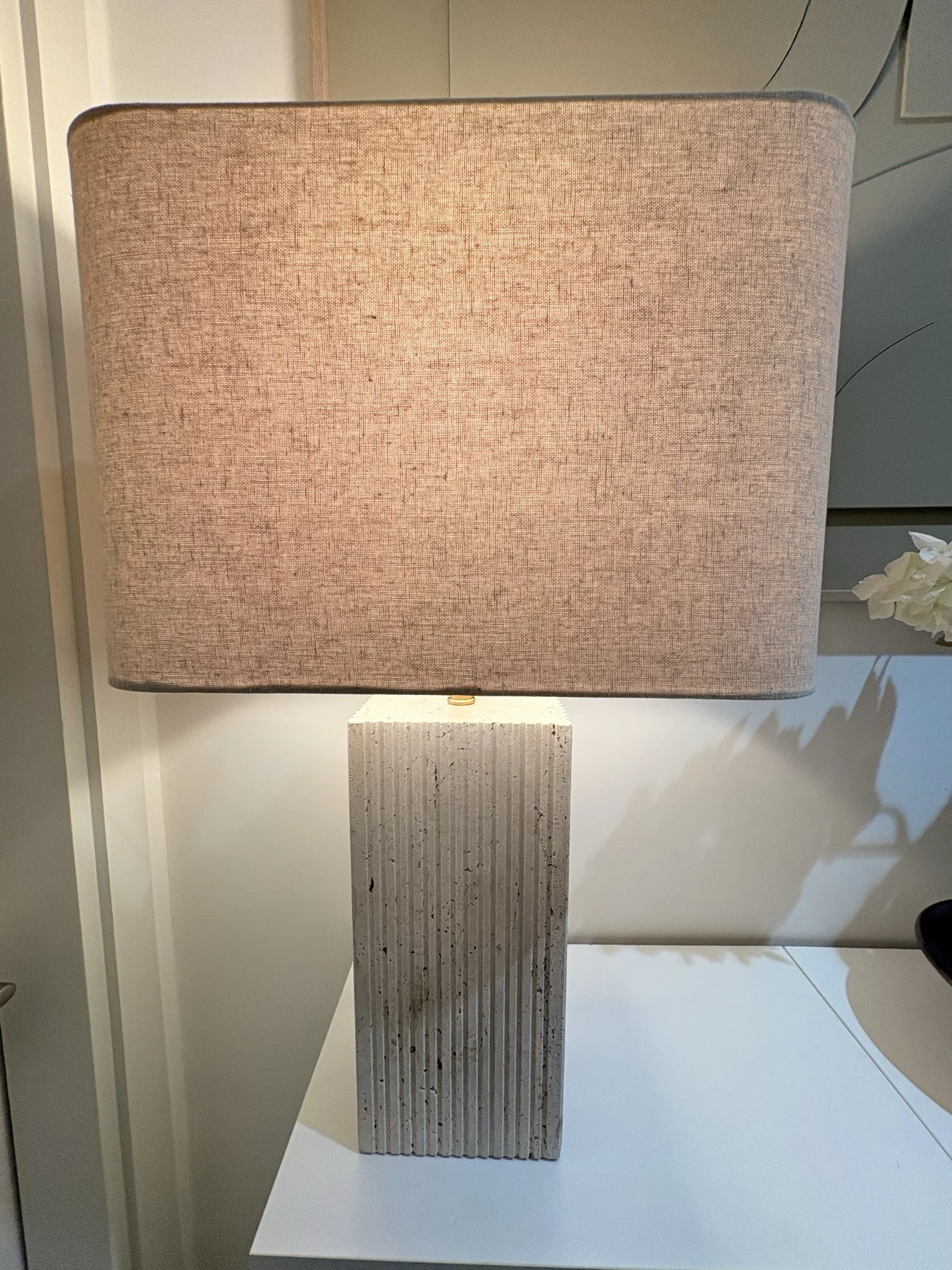
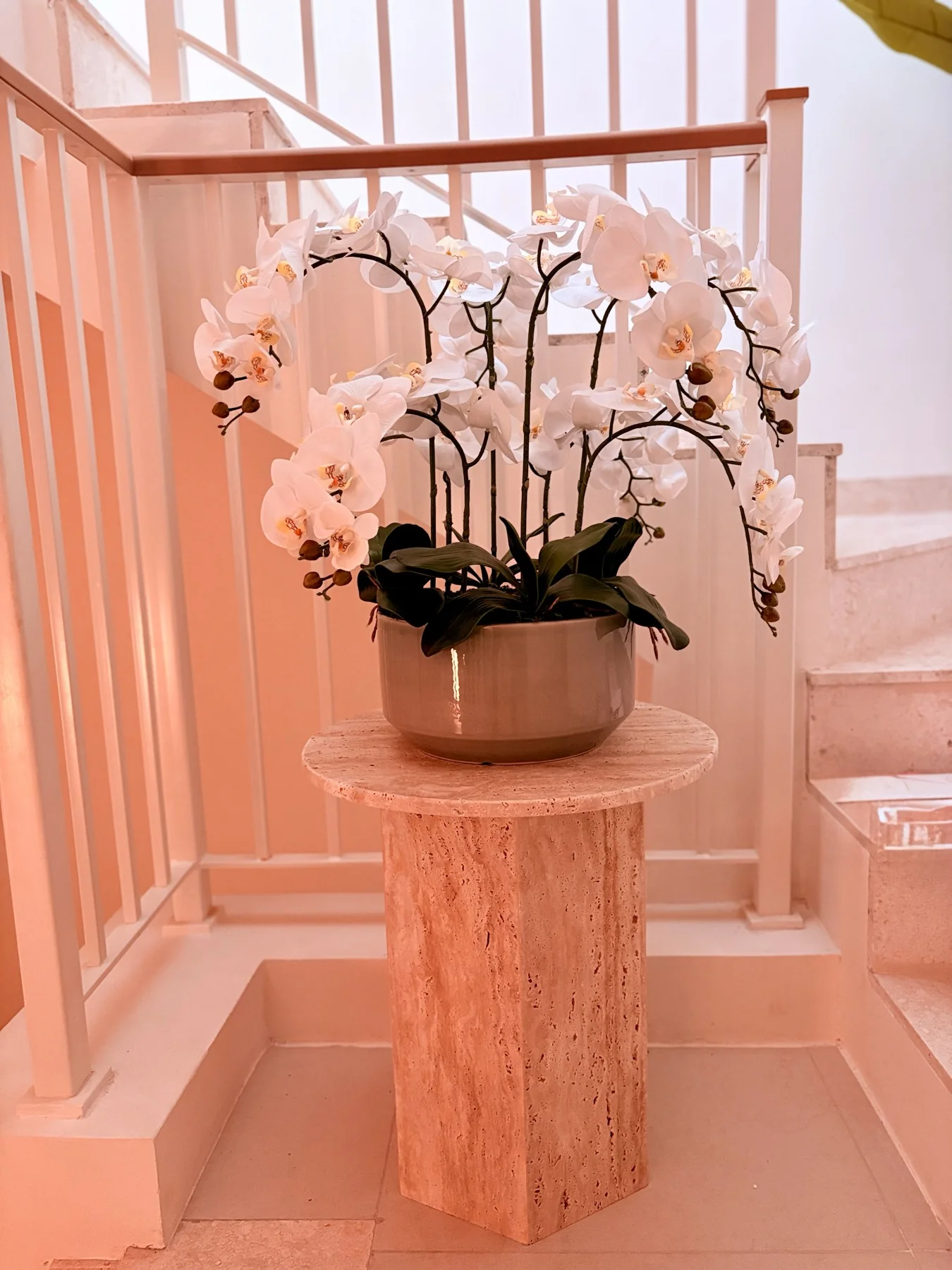
Continuity does not require buying a matching collection. The travertine can appear as a substantial plinth, a narrower lamp base or a round side table. Your eye recognises the relationship, while the change in shape gives each piece its own purpose.
The fluted lamp and the orchid table show how much variety one material can hold. One uses vertical grooves and a fabric shade; the other has a broad circular top and a simple base. Repeating the stone brings them together without asking either piece to look like the other. Natural variation in the material adds to that conversation.
Think About What You See Between Rooms.
Stand at a doorway, on a landing or at the end of a passage. Which pieces can you see together? Those views matter as much as the arrangement inside each individual room. A familiar surface or metal finish in the next space can make the transition feel considered.
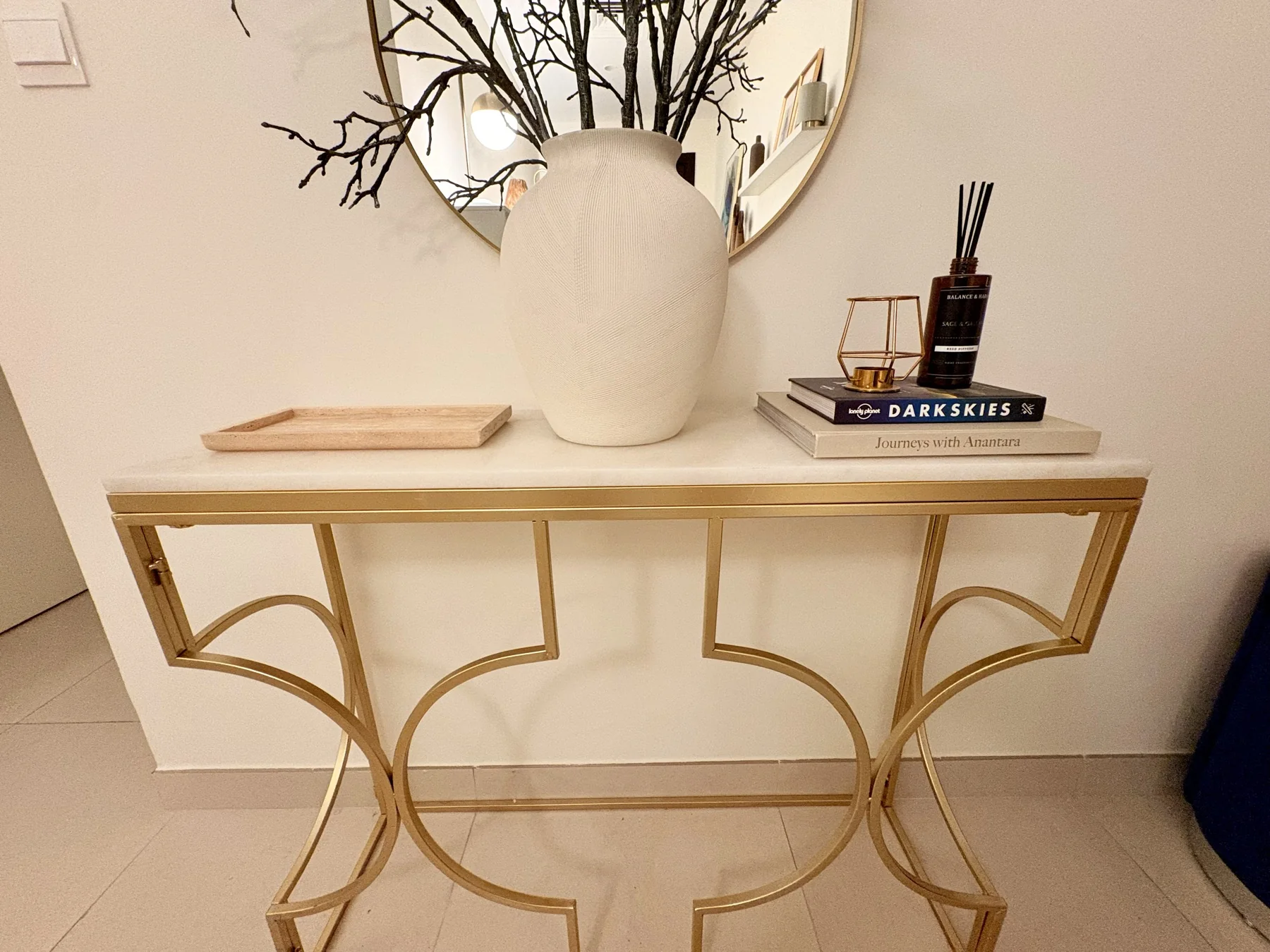
The console and shelving carry pale stone and warm metal into different settings. Their proportions and uses are different, but their shared palette creates a connection. Even where rooms are not visible at the same time, a detail you encounter again can help the home feel like a whole.
Carry A Colour Through The Smaller Details.
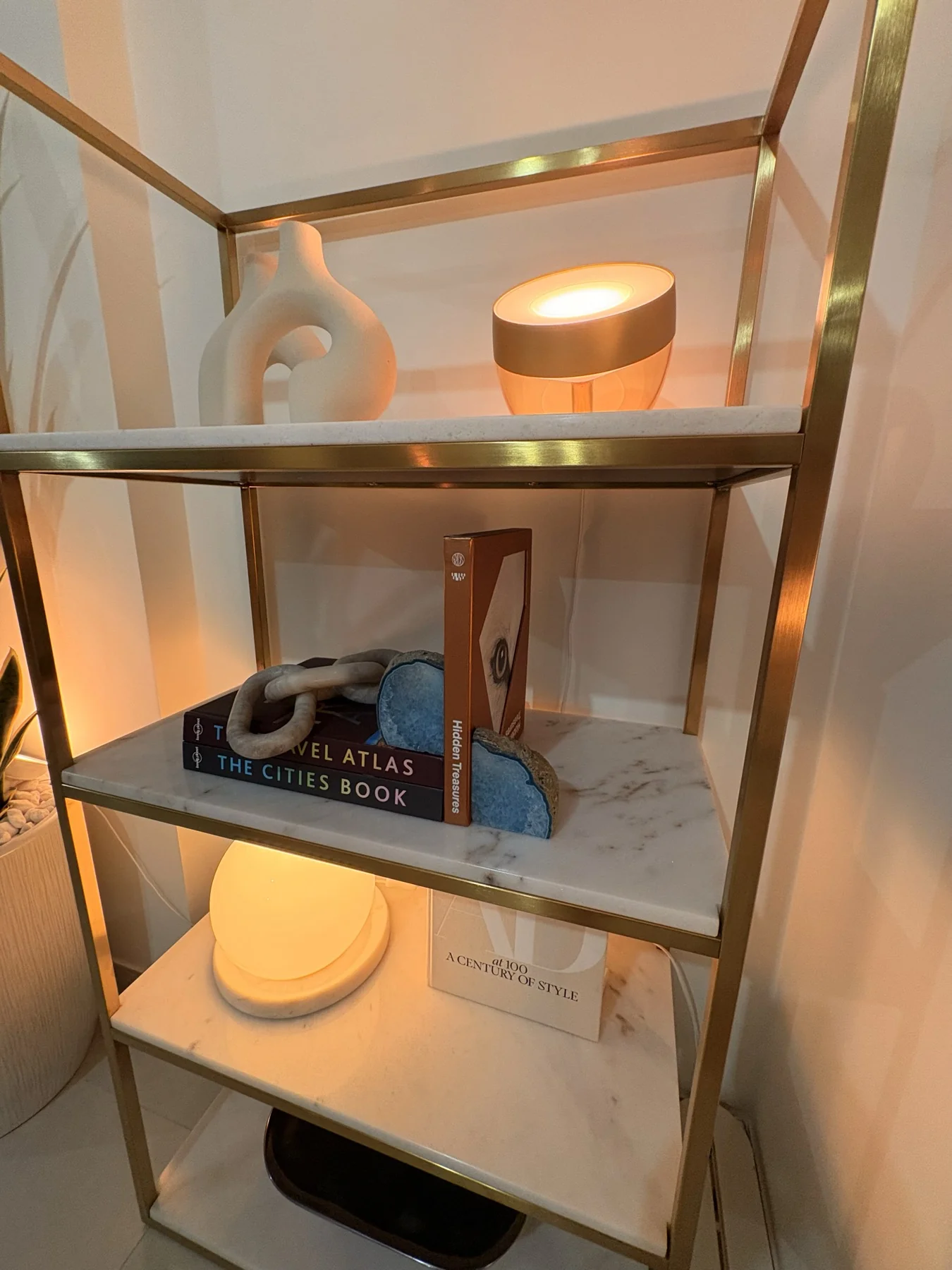
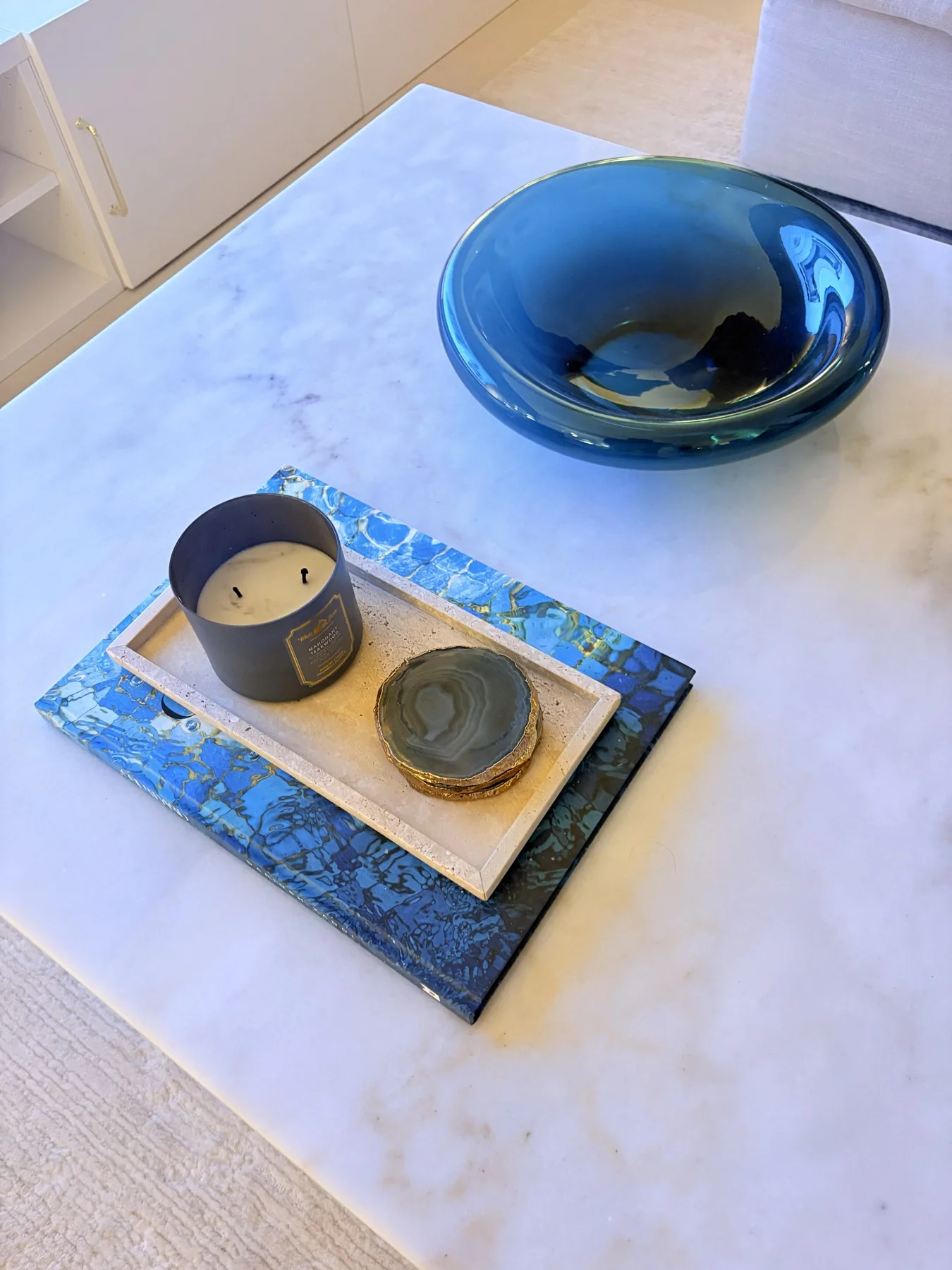
Materials are only one way to connect a home. A colour from an artwork can reappear in a glass bowl, a book cover or a small object. In these photographs, the deeper blue of the artwork finds quieter echoes on the shelves and coffee table.
The quantities do not need to be equal. A large artwork can lead, while a smaller object elsewhere answers it. Keep some surfaces clear so the repetition can register. When every object competes for attention, even a carefully chosen palette can become difficult to read.
Let Each Room Keep Its Own Character.
A connected home still needs variation. A bedroom might use more fabric and less metal; an entrance may need a durable surface and a stronger focal point. Keep a few familiar details, then change the balance to suit the way each space is used.
Look at finishes in their actual light before committing. A pale stone that feels cool beside a window can become much warmer near a lamp. Bringing samples together in more than one room helps you judge whether the relationship still works. Cohesion should make the home feel comfortable to move through, rather than impose a rule on every purchase.
SOMETHING TO TRY AT HOME
- Choose one material and one supporting colour already present in your home.
- Look through two adjoining spaces and identify a detail that could connect them.
- Repeat that detail in a different shape or scale before adding another finish.
- Leave room for pieces you love, even when they bring something unexpected.
Talk about your space.
Bring it to a conversation. We can start with what isn’t working, or the feeling you want more of.
Start Your ProjectRelated insights
All Design Insights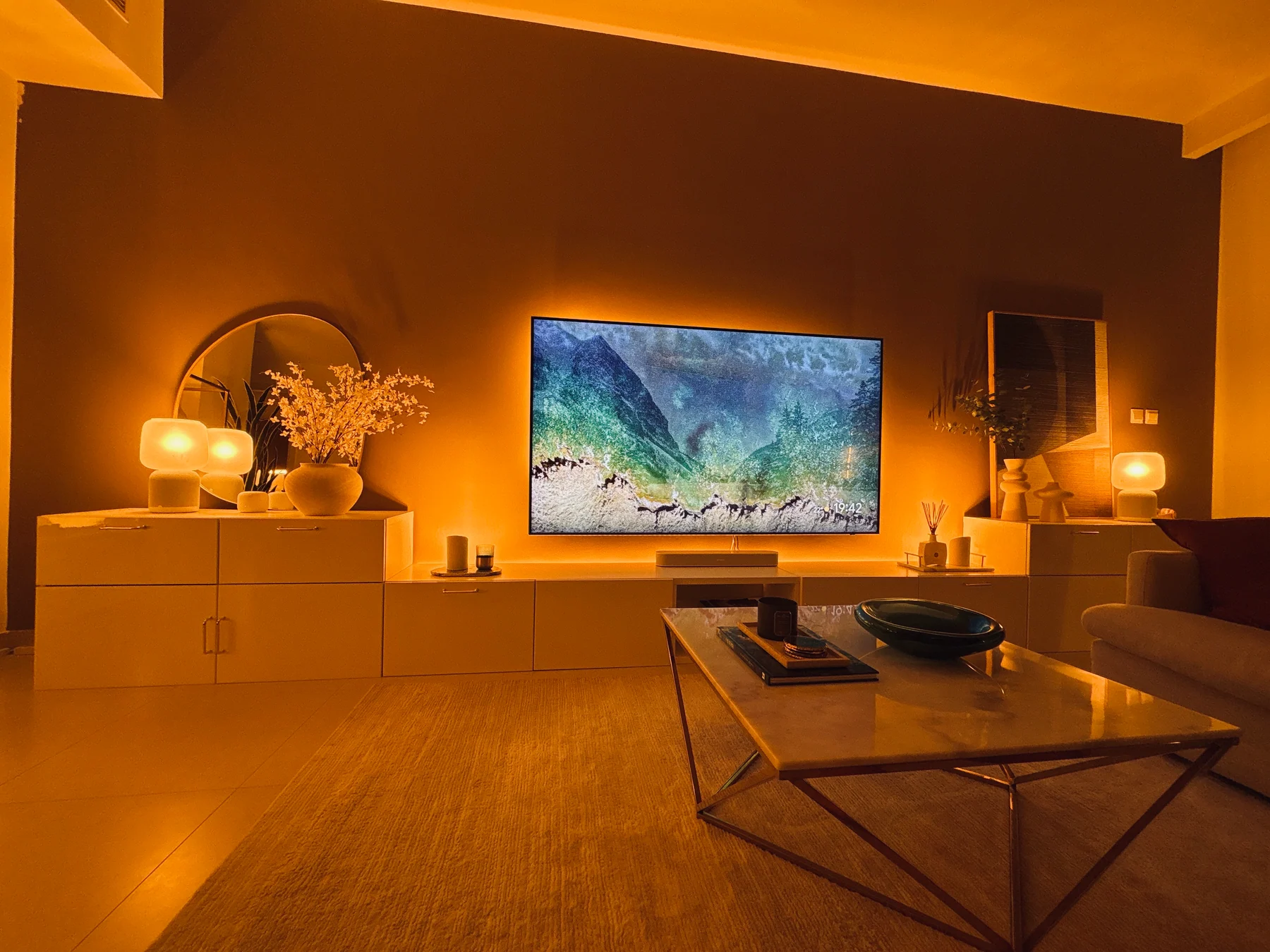
One Room. Two Moods.
A room does not have to feel the same at eleven in the morning and eight at night. Its light can follow the life happening inside it.
Read The Insight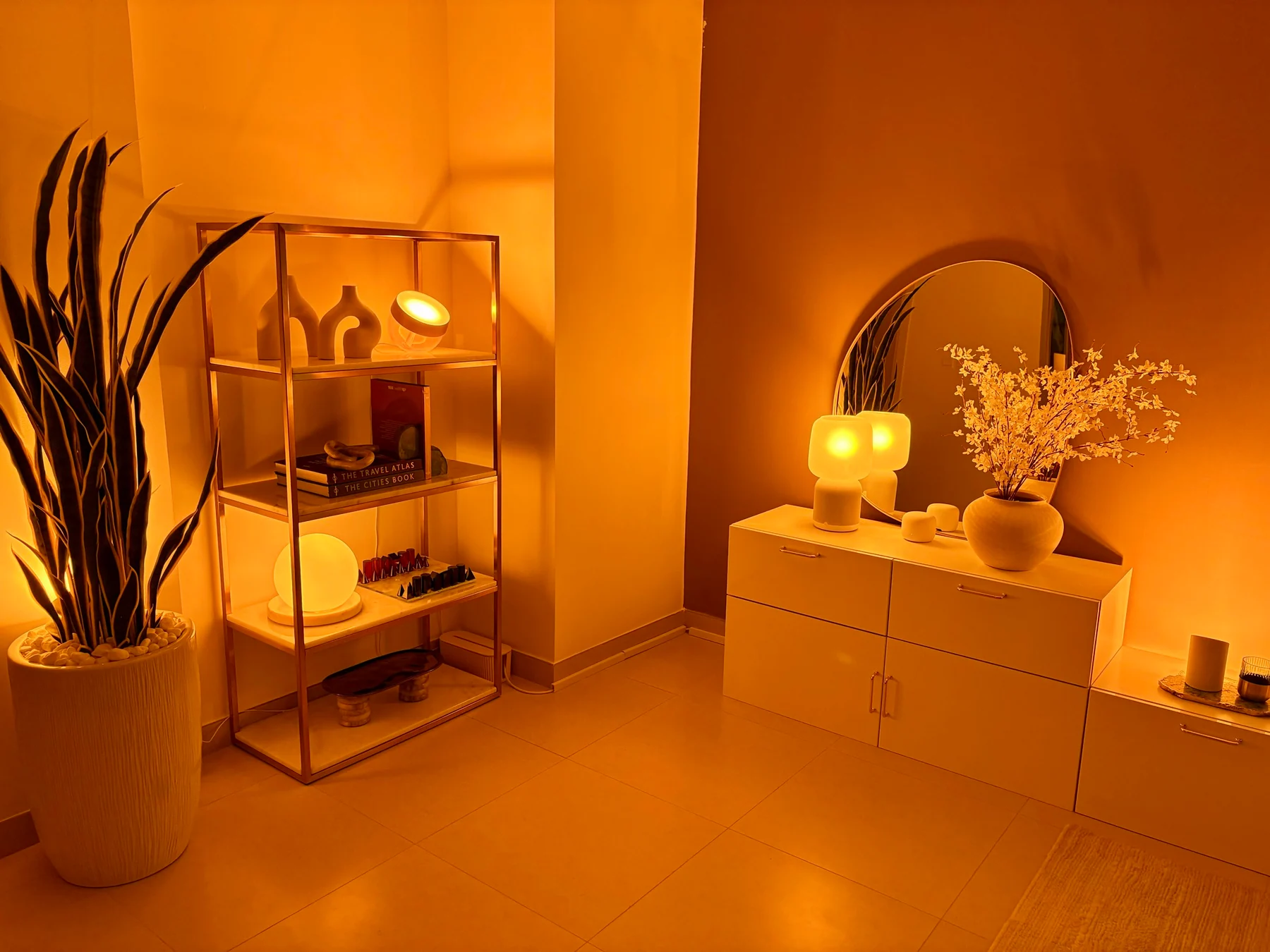
What to keep before you buy.
A new direction does not always need a new beginning. The things you already own can give a room its character, its constraints and its most interesting possibilities.
Read The Insight