LIGHT & ATMOSPHERE
One Room. Two Moods.
A room does not have to feel the same at eleven in the morning and eight at night. Its light can follow the life happening inside it.
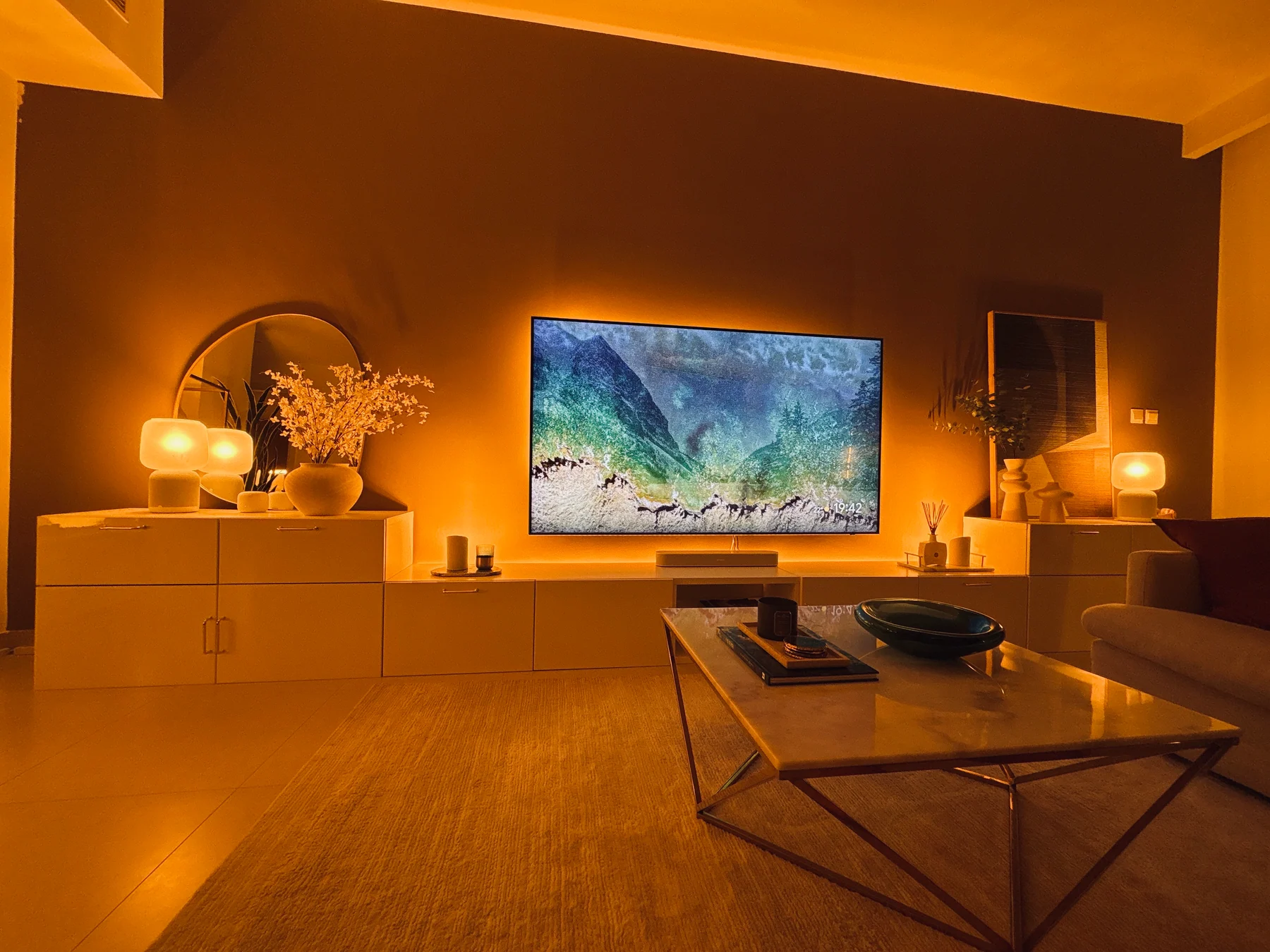
Begin with the evening you want.
Think about what actually happens after sunset. Reading asks something different of a room than watching a film. Conversation is more comfortable when you can see a face without looking into a bright bulb. Instead of choosing a lamp simply because it looks beautiful, give each source of light a job.
A useful starting point is to separate light for seeing clearly from light that makes the background comfortable. A reading light can serve one seat while a shaded lamp settles the rest of the room. Neither needs to illuminate every corner equally.
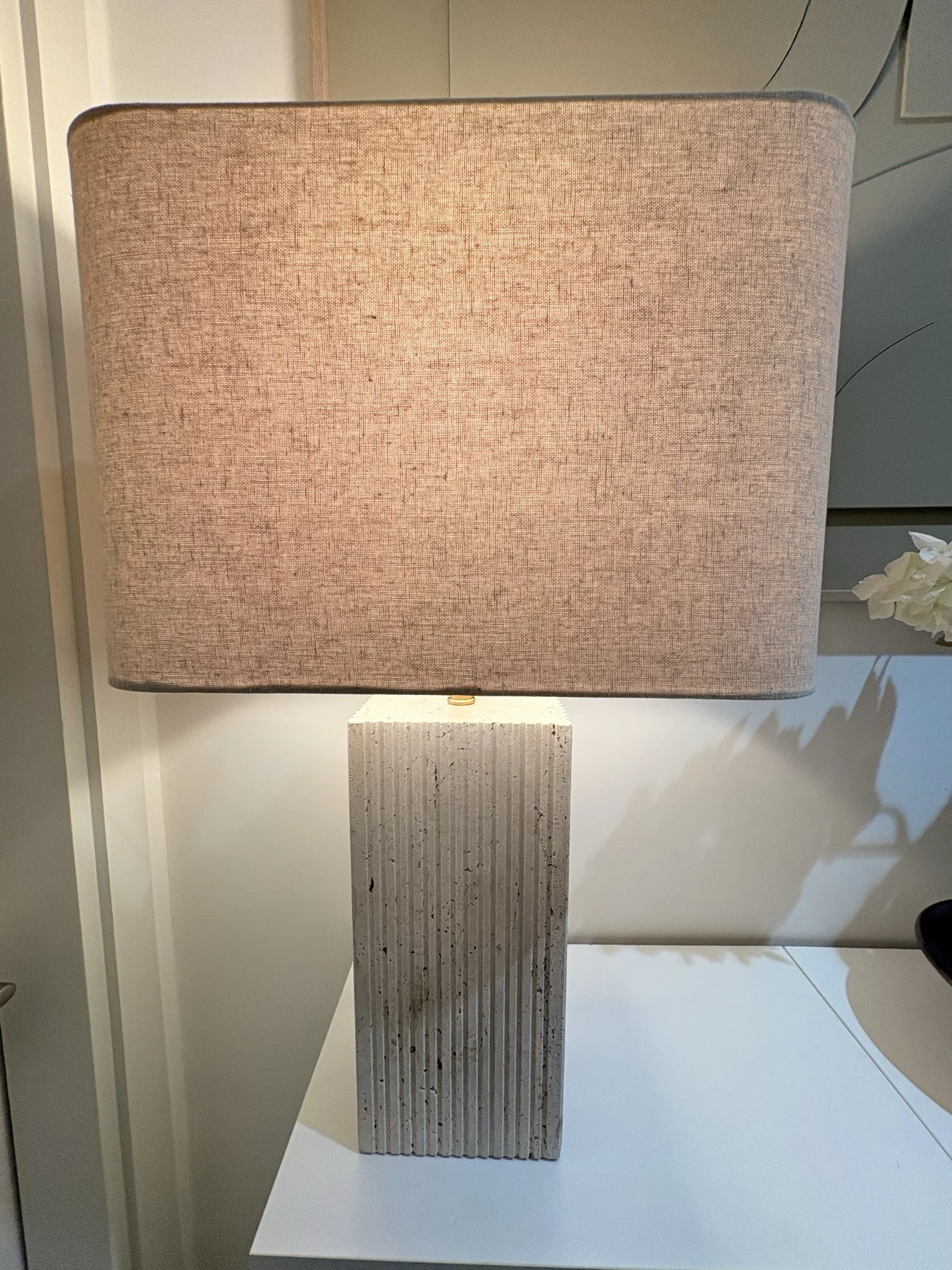
Let some areas be quieter.
An evenly bright room can lose its depth. Light on a wall, near a textured surface or beside a favourite object can draw the eye through the space. The darker areas between those moments are part of the composition too. The aim is a comfortable balance, not an arrangement that leaves the route across the room difficult to see.
In the downstairs living room, the lamps and the glow behind the television create several points of warmth. The relationship between those pools of light and the seating around them gives the room its evening character.
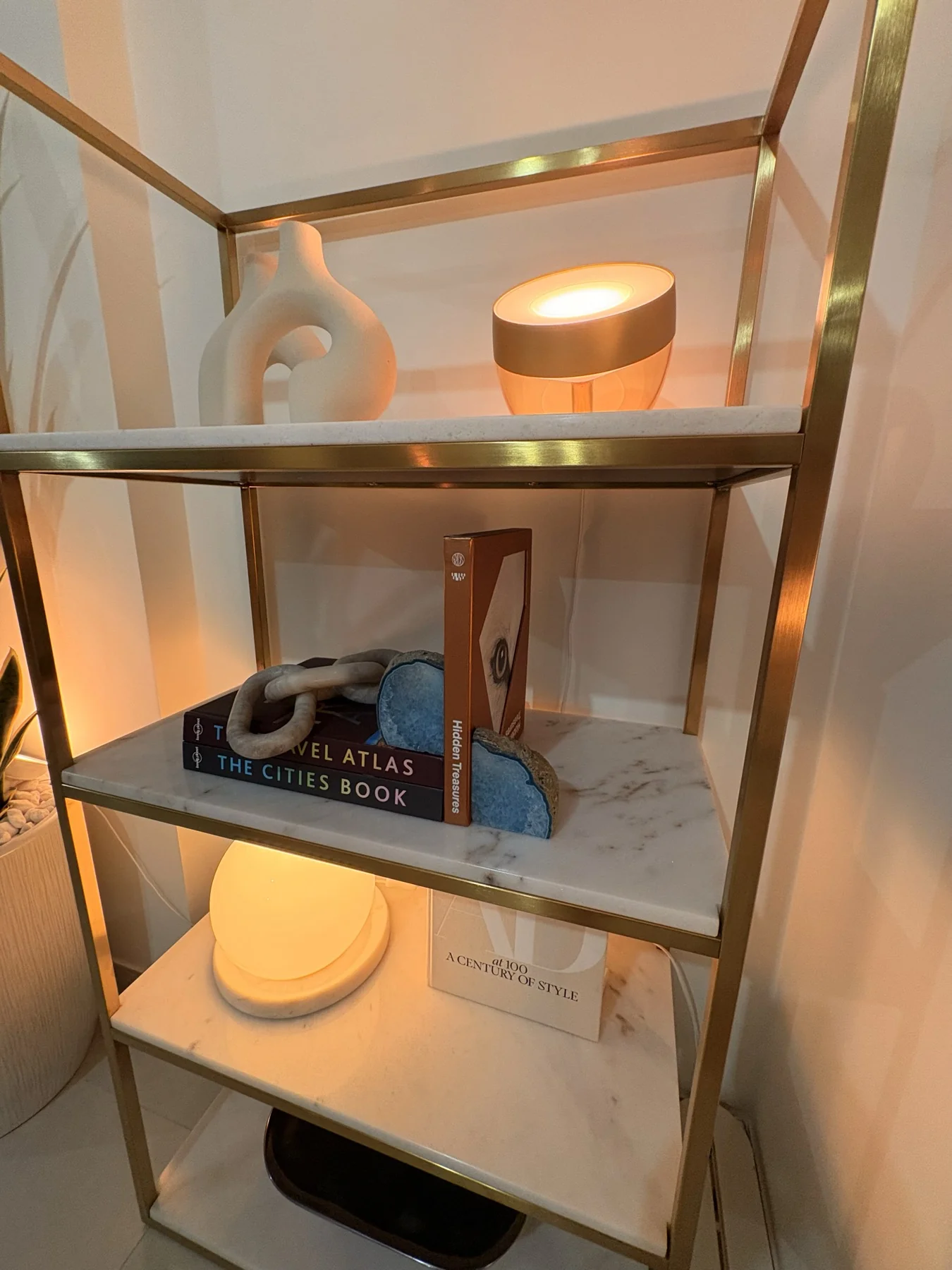
Judge it from where you sit.
A lamp that looks right when you stand beside it may feel glaring from the sofa. Look at the shade, the exposed bulb and the reflection in a screen or mirror from the position you will actually use. A small change in placement can make a greater difference than adding another fitting.
Colour matters in context. Compare the same fabric or paint sample under daylight and your evening lamps before choosing it. Consistency between nearby light sources can help a room feel settled, but there is no single setting that replaces seeing the result in your own home.
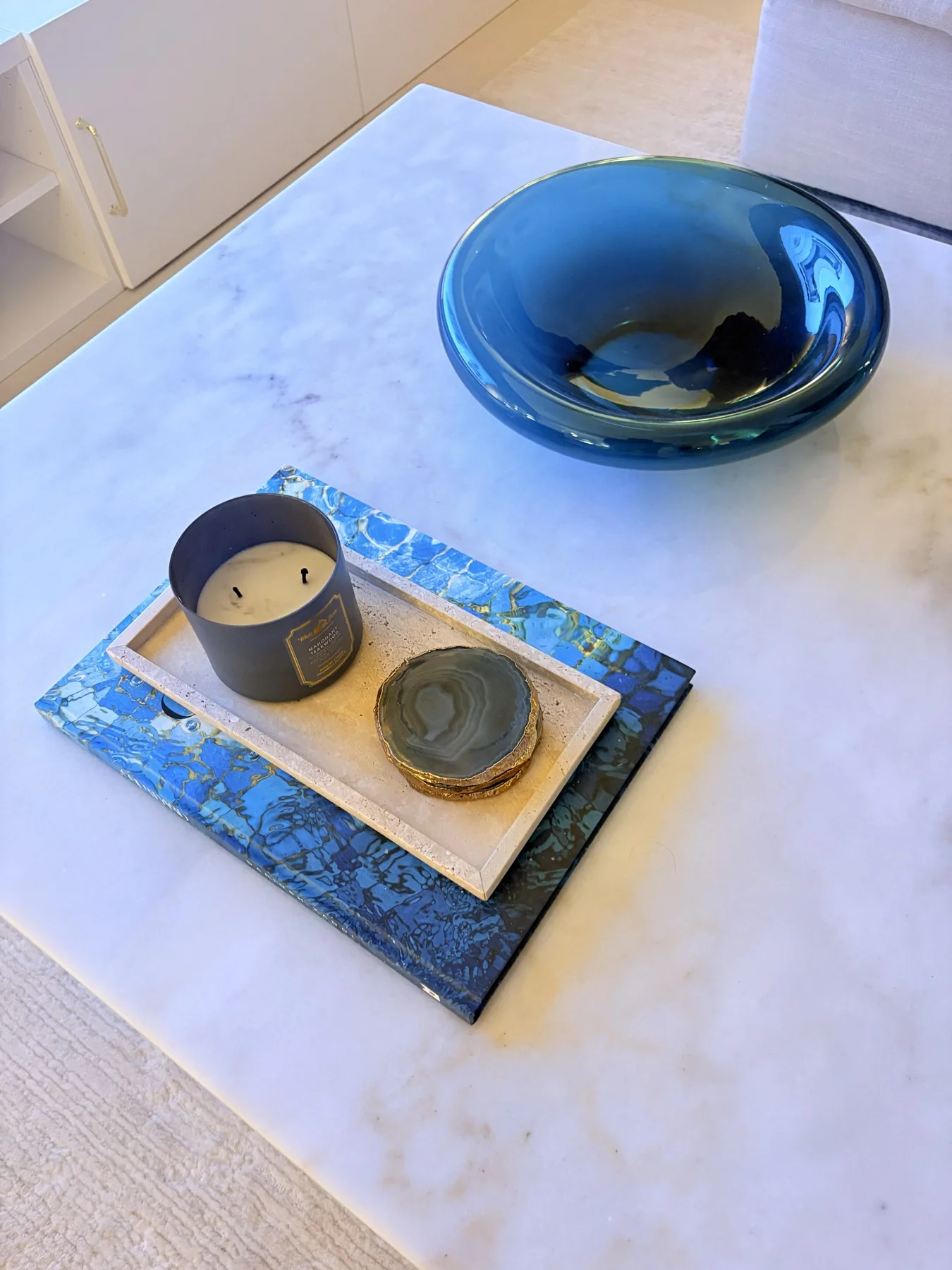
Keep the change easy.
A lovely evening scheme is less useful if turning it on requires a tour of the room. Think about accessible switches and the sequence of arriving, settling and going to bed. Existing plug-in lamps are a useful way to explore the effect; electrical changes belong with a qualified professional.
Before buying, spend one evening trying the lamps you already own in different places. Notice whether the room feels more welcoming, whether you can do what you need to do, and whether the light itself is comfortable. Those observations make the next choice much clearer.
SOMETHING TO TRY AT HOME
- Name two evening activities the room should support.
- Check glare and reflections from your usual seat.
- Try a softer background layer before adding more overhead light.
Talk about your space.
Bring it to a conversation. We can start with what isn’t working, or the feeling you want more of.
Start Your ProjectRelated insights
All Design Insights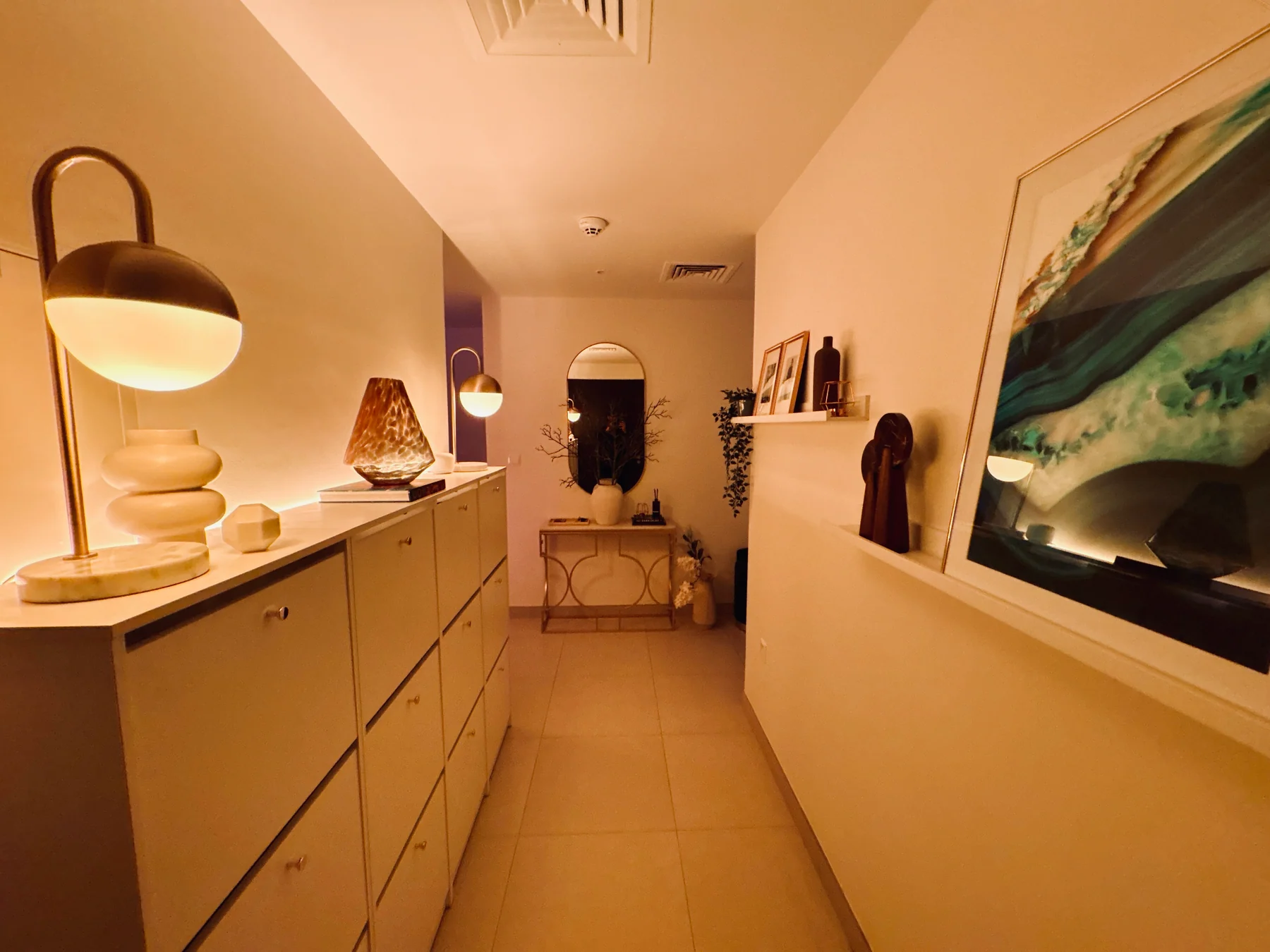
An entrance that welcomes you.
The entrance is more than a passage between the outside world and the rest of your home. It is where the day begins to change pace.
Read The Insight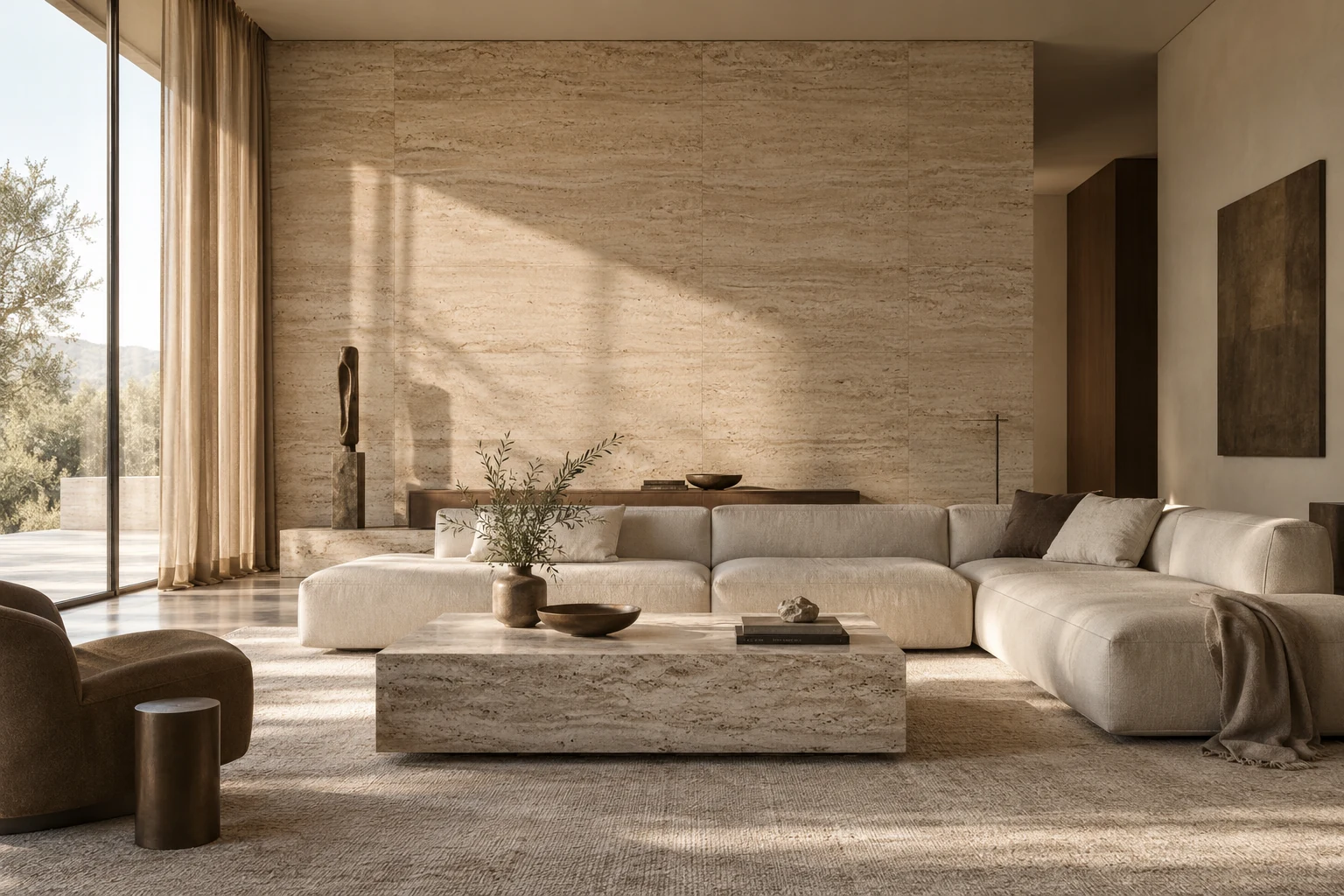
Why a neutral room can feel unfinished.
A quiet palette is a beginning, not a complete atmosphere. A room made of similar colours still needs relationships, variation and somewhere for the eye to rest.
Read The Insight